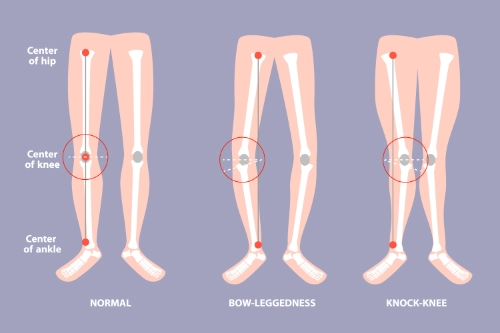
 If you’ve ever noticed that your knees bow outward when you stand or seem to angle inward and touch when your ankles are apart, you may be dealing with a condition known as genu varum (bowlegs) or genu valgum (knock-knees). While most people think of these as cosmetic concerns or childhood quirks that children eventually outgrow, the truth is that persistent knee misalignment can have a significant impact on the entire body — especially your spine.
The connection between your knees and your spine might not be obvious at first. But when you understand how your body works as an interconnected chain, it becomes clear that misalignment at one level inevitably creates compensations at another. That’s where chiropractic care comes in — offering a natural, drug-free approach to addressing both the spinal subluxations caused by knee misalignment and the underlying biomechanical dysfunction contributing to the problem.
What Are Genu Varum and Genu Valgum?
Genu varum, commonly referred to as bowlegs, is a condition where the knees curve outward while the ankles remain close together. When someone with bowlegs stands with their feet together, there is a noticeable gap between the knees. This condition is normal in infants and toddlers but typically corrects itself by age three or four. When it persists into adolescence or adulthood, it can lead to uneven weight distribution, joint stress, and postural compensation throughout the body.
Genu valgum, or knock-knees, is essentially the opposite. The knees angle inward and may touch or overlap while the ankles remain spaced apart. Like bowlegs, mild knock-knees are common in young children and usually resolve on their own. However, when the condition persists or develops later in life due to injury, arthritis, or obesity, it can create a cascade of musculoskeletal problems that extend well beyond the knees.
How Knee Misalignment Affects Your Spine
Your body is a kinetic chain. That means every joint and muscle group is connected, and when one area is out of alignment, other areas have to compensate. Think of it like a building — if the foundation is uneven, every floor above it will be affected. Your knees serve as a critical link between your feet and your hips, and when they are misaligned, the effects travel upward through the pelvis and directly into the spine.
Pelvic Tilt and Uneven Hip Alignment
Both bowlegs and knock-knees alter the angle at which force is transmitted through the legs to the pelvis. Genu varum tends to create outward rotational stress on the hips, while genu valgum pushes the hips into an inward rotational pattern. Either way, the pelvis can become tilted or rotated, which directly affects the alignment of the sacrum — the triangular bone at the base of your spine. Once the sacrum shifts, the lumbar spine above it must compensate, setting the stage for subluxations throughout the spinal column.
Compensatory Spinal Curves and Subluxations
When the pelvis tilts due to knee misalignment, the lumbar spine often develops a compensatory curve to keep the head and eyes level. This is your body’s natural attempt to maintain balance, but it comes at a cost. These compensatory curves place abnormal stress on the spinal joints, discs, and surrounding soft tissues. Over time, this can lead to vertebral subluxations — misalignments of individual spinal vertebrae that interfere with nerve function and restrict normal joint movement.
Subluxations caused by lower extremity misalignment don’t just stay in the lower back, either. The compensatory pattern often continues upward into the thoracic spine and even the cervical spine. This is why someone with bowlegs or knock-knees may experience not only low back pain but also mid-back stiffness, neck tension, and headaches.
Muscle Imbalances and Chronic Tension
Knee misalignment also creates significant muscle imbalances throughout the legs, hips, and trunk. With bowlegs, the muscles on the outer thighs and hips tend to become tight and overworked, while the inner thigh muscles weaken. With knock-knees, the pattern often reverses. These muscle imbalances don’t stop at the hips — they extend into the core stabilizers and spinal erector muscles, further contributing to abnormal spinal mechanics and increased susceptibility to subluxations.
Common Symptoms of Spinal Subluxations Related to Knee Misalignment
Many patients don’t initially connect their knee alignment with their spinal symptoms. However, the following issues are commonly associated with subluxations that develop as a result of genu varum or genu valgum:
Chronic low back pain that doesn’t seem to respond to rest or basic stretching. Hip pain or tightness on one or both sides. Uneven gait or walking pattern that causes fatigue or joint soreness. Mid-back stiffness and reduced range of motion. Neck pain and tension headaches resulting from upper spinal compensation. Sciatica-like symptoms caused by nerve irritation at the lumbar or sacral level. Difficulty standing or sitting for extended periods without discomfort.
How Chiropractic Care Helps Bowlegs, Knock-Knees, and Related Subluxations
Chiropractic care takes a whole-body approach to musculoskeletal health, which makes it uniquely suited to address the complex interplay between knee misalignment and spinal subluxations. Rather than simply treating isolated symptoms, a chiropractor evaluates how your entire structure functions together — from your feet and knees all the way up through your spine.
Comprehensive Postural and Biomechanical Assessment
The first step is a thorough evaluation. A chiropractor will assess your posture, gait, leg alignment, pelvic symmetry, and spinal curvature to understand exactly how your knee condition is affecting the rest of your body. This often includes range-of-motion testing, orthopedic evaluations, and in many cases digital X-rays to visualize the alignment of the spine and pelvis.
Chiropractic Adjustments to Correct Subluxations
Once the areas of subluxation are identified, targeted chiropractic adjustments are used to restore proper alignment and joint mobility. For patients with bowlegs or knock-knees, adjustments typically focus on the lumbar spine, sacroiliac joints, and pelvis — the areas most directly impacted by lower extremity misalignment. Correcting these subluxations helps reduce nerve interference, decrease pain, and improve overall spinal function.
Extremity Adjustments for the Knees, Ankles, and Hips
Many chiropractors also perform extremity adjustments — gentle corrections applied to joints outside the spine. For patients with genu varum or genu valgum, adjustments to the knee joint, ankle, and hip can help improve alignment and reduce the compensatory stress being placed on the spine. While chiropractic care may not fully reverse a structural knee deformity in adults, it can significantly improve joint function and reduce the downstream effects on the rest of the body.
Corrective Exercises and Rehabilitation
Strengthening weakened muscles and stretching tight ones is essential for long-term improvement. A chiropractor can prescribe specific exercises designed to address the muscle imbalances caused by knee misalignment. For bowlegs, this often includes strengthening the inner thigh and hip adductor muscles while stretching the outer hip. For knock-knees, the focus shifts to strengthening the hip abductors and lateral stabilizers. Core strengthening exercises are also commonly recommended to support better spinal stability.
Custom Orthotics and Supportive Recommendations
Because knee misalignment often begins at or is influenced by the feet, many chiropractors recommend custom orthotic insoles to improve foot mechanics and support better overall alignment. Correcting pronation or supination at the foot level can reduce the rotational forces traveling up through the knees and into the pelvis, helping to prevent recurring subluxations.
Why a Whole-Body Approach Matters
One of the most important things to understand about conditions like bowlegs and knock-knees is that they rarely exist in isolation. The body compensates constantly, and a problem at the knee creates a ripple effect that can be felt in the ankles, hips, lower back, mid-back, and neck. Treating only the site of pain without addressing the root biomechanical cause often leads to temporary relief followed by recurring problems.
Chiropractic care is built around the principle that the body functions as a connected whole. By addressing spinal subluxations, correcting joint restrictions in the extremities, restoring muscle balance, and supporting proper foot mechanics, chiropractic offers a comprehensive strategy for managing the effects of genu varum and genu valgum on the spine and overall health.
Frequently Asked Questions
Can chiropractic care fix bowlegs or knock-knees in adults?
Chiropractic care may not fully reverse a structural bone deformity in adults, but it can significantly improve joint function, reduce compensatory stress on the spine and pelvis, and relieve the pain and stiffness that often accompany these conditions. Many adult patients experience meaningful improvement in comfort and mobility through consistent chiropractic treatment.
How do I know if my knee alignment is causing my back pain?
If you have visibly bowed or knock-kneed legs and also experience chronic low back pain, hip stiffness, or uneven posture, there is a good chance the two are related. A chiropractic evaluation that includes postural analysis, gait assessment, and spinal examination can help determine whether your knee alignment is contributing to your spinal symptoms.
Are bowlegs and knock-knees common in adults?
While both conditions are most commonly associated with childhood development, they can persist into adulthood or develop later in life due to factors like arthritis, obesity, bone disorders, or previous injury. Adults with persistent genu varum or genu valgum should be evaluated for associated spinal and joint dysfunction.
What does a chiropractic adjustment for the knee feel like?
Extremity adjustments for the knee are typically gentle and well-tolerated. You may hear a small popping sound similar to what occurs during a spinal adjustment, and most patients feel an immediate improvement in joint mobility and a reduction in tightness or discomfort.
How often should I see a chiropractor if I have bowlegs or knock-knees?
The frequency of visits depends on the severity of your condition and the extent of spinal involvement. Many patients begin with more frequent visits to address acute subluxations and pain, then transition to a maintenance schedule to support long-term alignment and prevent recurrence. Your chiropractor will develop a treatment plan tailored to your specific needs.
Can children with bowlegs or knock-knees benefit from chiropractic care?
Yes. Pediatric chiropractic care is gentle, safe, and can be very beneficial for children whose knee alignment is not correcting on its own or is causing gait issues and postural compensation. Early intervention can help prevent the development of spinal subluxations and muscle imbalances that become harder to correct later in life.
Take the First Step Toward Better Alignment
If you or a loved one is dealing with bowlegs, knock-knees, or unexplained back pain that may be connected to lower extremity misalignment, chiropractic care can help. Our office specializes in identifying the root cause of spinal subluxations and providing natural, effective treatment to restore proper function throughout the body.
Call our office today to schedule a consultation. Let us evaluate your alignment from the ground up and put together a personalized care plan to get you moving, feeling, and functioning at your best. You don’t have to live with pain — we’re here to help.
For More Information
We would be happy to answer any questions you have about this article, general spinal health or your specific situation. To discuss your symptoms and concerns call (208) 656-8883.
DID YOU ENJOY THIS ARTICLE?
If so, get email updates for free! Just leave your email address in the field provided below and we'll handle the rest.
NEED TO SCHEDULE AN APPOINTMENT?
Then call Dr. Todd Orchard at (208) 656-8883 today!
Orchard Chiropractic
160 E. Valley River Drive #3
Rexburg, Idaho 83440
How We Are Different
Dr. Orchard is a unique Rexburg chiropractor who specializes in difficult cases that have not responded to other care. All treatment plans are highly individualized based on your specific history, needs and goals.
Areas We Serve
We are located in Rexburg and serve the communities that reside in zip codes 83440, 83460, 83442, 83448, and 83445. However, we see patients from a large radius around Rexburg which include Brigham Young University, Rigby, Sugar City, and St. Anthony because of the unique, customized treatment options we offer.