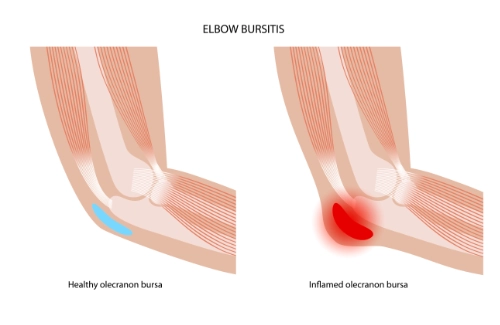
 If the tip of your elbow has suddenly swollen up like a golf ball — or even a small egg — you’re probably dealing with elbow bursitis, also known as olecranon bursitis. It’s one of the more visually alarming conditions we see in our office, and understandably, it tends to send patients straight into a panic. The good news is that in most cases, elbow bursitis is very treatable, and chiropractic care can play a meaningful role in reducing inflammation, restoring healthy joint mechanics, and preventing the problem from becoming a recurring issue.
In this article, we’ll walk through what elbow bursitis actually is, why it develops, how to recognize it, and what a conservative, drug-free treatment plan looks like — including when it’s time to pick up the phone and schedule an evaluation.
What Is Elbow Bursitis
Tucked at the very tip of your elbow, just under the skin, is a small fluid-filled sac called the olecranon bursa. Its job is simple but important: it acts as a cushion, reducing friction between the skin and the bony point of your elbow (the olecranon process) every time you lean on a table, rest your arm on a desk, or bend and straighten the joint throughout the day.
When that bursa becomes irritated, injured, or infected, it fills with excess fluid and becomes inflamed — a condition known as bursitis. Because the olecranon bursa sits so close to the surface, swelling here is often dramatic and immediately noticeable, even when pain levels are relatively mild. Some patients describe it as feeling like there’s a water balloon strapped to the back of their elbow.
What Causes Elbow Bursitis
Elbow bursitis tends to fall into a few different categories, and identifying the underlying cause is an important part of building an effective treatment plan.
- Repetitive pressure or friction — Leaning on your elbow for long periods at a desk, workbench, or during certain sports (think wrestlers, plumbers, or students who study with their elbows on the table) is one of the most common triggers. This repetitive irritation is sometimes nicknamed “student’s elbow” or “plumber’s elbow.”
- Direct trauma — A fall directly onto the point of the elbow, or a sharp bump against a hard surface, can cause the bursa to fill rapidly with blood or fluid.
- Prolonged, sustained flexion — Sleeping with the elbow bent for long stretches, or occupations that require the arm to stay in one fixed position, can gradually irritate the bursa.
- Underlying inflammatory conditions — Conditions like gout or rheumatoid arthritis can trigger bursitis flare-ups even without a specific injury.
- Infection (septic bursitis) — In some cases, bacteria enter through a small cut or abrasion near the elbow and infect the bursa fluid. This form requires prompt medical attention and is not something chiropractic care alone should address.
Beyond the local cause, we often see biomechanical factors upstream of the elbow — restricted motion in the shoulder, wrist, or cervical spine — that change how a person loads and positions their arm throughout the day, quietly increasing pressure on the elbow over time.
Recognizing the Symptoms of Elbow Bursitis
The hallmark sign of elbow bursitis is visible swelling right at the tip of the elbow, but the full symptom picture can include:
- A soft, movable, fluid-filled lump at the point of the elbow
- Mild to moderate pain, especially when pressure is applied directly to the area
- Warmth or redness over the swollen area
- Stiffness or a pulling sensation when fully bending the elbow
- Tenderness that worsens with continued leaning or pressure
One key distinction: with simple, non-infectious bursitis, you can typically still bend and straighten the elbow through a fairly normal range of motion, and the swelling is often described as painless or only mildly tender. If the area is intensely painful, hot to the touch, accompanied by fever, or the skin is broken, this can indicate infection and should be evaluated by a medical provider right away, since septic bursitis sometimes requires antibiotics or drainage before conservative care is appropriate.
How Chiropractic Care Treats Elbow Bursitis
Once infection has been ruled out, chiropractic care offers a conservative, non-invasive approach to resolving elbow bursitis and — just as importantly — correcting the mechanical patterns that allowed it to develop in the first place. A typical treatment plan may include:
Activity and Pressure Modification
The first step is almost always removing the source of repetitive pressure. We’ll work with you to identify daily habits — a desk setup, a sport, a sleeping position — that may be feeding the irritation, and suggest practical adjustments like padded elbow sleeves or ergonomic changes to your workstation.
Soft Tissue Therapy
Techniques such as myofascial release and instrument-assisted soft tissue mobilization (IASTM/Graston) can help reduce inflammation in the surrounding tissue, improve local circulation, and prevent the muscles around the elbow from compensating in ways that add stress to the joint.
Joint Mobilization and Extremity Adjustments
If the elbow, wrist, or shoulder has developed restricted motion as a result of guarding or altered use, gentle extremity adjustments can restore proper joint mechanics and reduce compensatory strain that keeps pressure on the bursa.
Upper Cervical and Shoulder Assessment
Because arm position and posture originate higher up the kinetic chain, we often assess the cervical spine and shoulder girdle. Restrictions or imbalances here can change how a person carries and rests their arm throughout the day, indirectly increasing pressure on the elbow.
Therapeutic Exercise and Rehabilitation
Once acute swelling has calmed down, targeted stretching and strengthening exercises help restore full range of motion, support the joint, and reduce the likelihood of the bursa becoming irritated again.
Cold Therapy and Compression Guidance
In the early, more inflamed stage, we may recommend cold therapy protocols and gentle compression to help the swelling subside more quickly, working alongside your body’s natural healing response.
Chiropractic Care Versus Aspiration, Steroid Injections, and Surgery
For more stubborn or recurrent cases, some providers recommend aspirating (draining) the bursa with a needle, injecting corticosteroids to reduce inflammation, or in rare chronic cases, surgically removing the bursa altogether. These interventions can carry downsides worth considering: aspiration can reintroduce infection risk if not performed carefully, steroid injections can weaken surrounding tissue with repeated use and don’t address the underlying mechanical cause, and surgical bursa removal involves recovery time and the small but real risks that come with any procedure.
Chiropractic care offers a first-line alternative that addresses both the immediate inflammation and the biomechanical root cause — without needles, drugs, or downtime. For many patients, especially those whose bursitis stems from repetitive pressure or postural habits rather than infection, conservative care resolves the issue completely and helps prevent it from coming back.
What to Expect During Recovery
Most cases of mild to moderate elbow bursitis begin improving within one to two weeks with proper activity modification and conservative care, though more chronic or recurrent cases may take longer to fully resolve. Your chiropractor will monitor the size of the swelling, your range of motion, and your comfort level with pressure on the joint at each visit, adjusting your treatment plan as you progress. Consistency matters here — continuing to lean on the elbow or delay treatment tends to prolong the irritation cycle, while early, active management typically produces faster, more complete results.
Take the First Step Toward Relief
You don’t have to live with a swollen, uncomfortable elbow, and you don’t need to jump straight to needles or surgery to find relief. Our team is experienced in identifying the true source of elbow bursitis and building a conservative treatment plan tailored to your body and your daily habits. Call our office today to schedule an evaluation — we’ll help you get the swelling down, restore full motion, and keep it from coming back.
Frequently Asked Questions About Elbow Bursitis
What does elbow bursitis look like?
Elbow bursitis typically appears as a soft, round swelling right at the bony tip of the elbow. It can range from a small, barely noticeable bump to a lump the size of a golf ball, and the skin over it may appear normal, slightly red, or warm to the touch depending on the severity of the inflammation.
Is elbow bursitis serious?
In most cases, no — simple bursitis caused by repetitive pressure or minor trauma is uncomfortable but not dangerous, and it usually responds well to conservative care. However, if the area is intensely painful, hot, red, or accompanied by fever, it could indicate an infection, which needs prompt medical evaluation.
Can chiropractic care help elbow bursitis?
Yes. Chiropractic care can help reduce inflammation through soft tissue therapy, restore proper joint mechanics with gentle extremity adjustments, and address the postural or biomechanical habits that may be contributing to repeated irritation of the bursa.
How long does elbow bursitis take to heal?
Mild cases often improve within one to two weeks with activity modification and conservative treatment. More chronic or recurrent cases can take several weeks to fully resolve, particularly if the underlying cause hasn’t been addressed.
Should I pop or drain elbow bursitis swelling myself?
No. Attempting to drain the swelling at home significantly increases the risk of introducing infection into the bursa. If drainage is medically necessary, it should always be performed by a trained healthcare provider using sterile technique.
What is the difference between elbow bursitis and tennis elbow or golfer’s elbow?
Elbow bursitis involves inflammation of the fluid-filled sac at the tip of the elbow, causing visible swelling. Tennis elbow (lateral epicondylitis) and golfer’s elbow (medial epicondylitis) involve inflammation or micro-tearing of the tendons on the outer or inner side of the elbow, causing pain rather than a fluid-filled lump. They are distinct conditions, though all three can result from repetitive strain.
When should I see a doctor instead of a chiropractor for elbow swelling?
If the swelling is accompanied by fever, intense redness, significant warmth, an open wound, or rapidly worsening pain, seek medical evaluation right away to rule out an infected bursa, which requires medical management before conservative care is appropriate.
For More Information
We would be happy to answer any questions you have about this article, general spinal health or your specific situation. To discuss your symptoms and concerns call (208) 656-8883.
DID YOU ENJOY THIS ARTICLE?
If so, get email updates for free! Just leave your email address in the field provided below and we'll handle the rest.
NEED TO SCHEDULE AN APPOINTMENT?
Then call Dr. Todd Orchard at (208) 656-8883 today!
Orchard Chiropractic
160 E. Valley River Drive #3
Rexburg, Idaho 83440
How We Are Different
Dr. Orchard is a unique Rexburg chiropractor who specializes in difficult cases that have not responded to other care. All treatment plans are highly individualized based on your specific history, needs and goals.
Areas We Serve
We are located in Rexburg and serve the communities that reside in zip codes 83440, 83460, 83442, 83448, and 83445. However, we see patients from a large radius around Rexburg which include Brigham Young University, Rigby, Sugar City, and St. Anthony because of the unique, customized treatment options we offer.