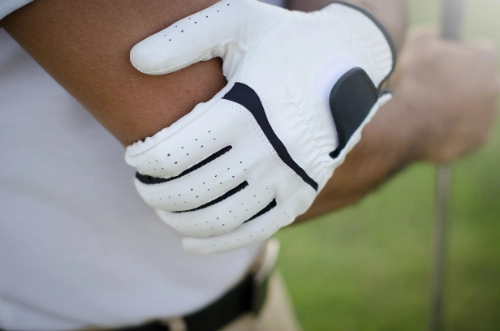
 If you’ve got a deep, nagging ache on the inside of your elbow that flares up every time you grip something, shake a hand, or swing a club, you may be dealing with golfer’s elbow. Despite the name, this condition has nothing to do with whether you actually play golf — it affects office workers, parents, weightlifters, and manual laborers just as often as it affects golfers. The good news is that chiropractic care offers a conservative, drug-free way to treat golfer’s elbow at its source, rather than just masking the pain until it comes roaring back.
In this article, we’ll break down what causes golfer’s elbow, how to recognize it, how chiropractic treatment addresses it, and what you can expect if you decide to get checked out.
What Is Golfer’s Elbow?
Golfer’s elbow, medically known as medial epicondylitis, is an inflammation of the tendons that connect your forearm muscles to the bony bump on the inside of your elbow — the medial epicondyle. These tendons are responsible for flexing your wrist and fingers, and gripping motions load them heavily. When they’re repeatedly overused or strained, tiny tears develop in the tendon fibers, leading to pain, stiffness, and weakness.
It’s easy to confuse golfer’s elbow with its more famous cousin, tennis elbow (lateral epicondylitis). The key difference is location: tennis elbow causes pain on the outside of the elbow, while golfer’s elbow causes pain on the inside. Both conditions stem from repetitive strain, but they involve different muscle groups and often respond to slightly different treatment approaches.
What Causes Golfer’s Elbow?
Despite its name, golfer’s elbow is far more commonly caused by everyday activities than by golf itself. Common culprits include:
Repetitive gripping motions — Typing, using hand tools, playing racquet sports, or even carrying heavy bags day after day can gradually overload the forearm flexor tendons.
Weightlifting — Exercises that involve heavy wrist curls, deadlifts, or pull-ups place significant strain on the medial elbow tendons, especially with poor form or rapid increases in training volume.
Throwing sports — Baseball pitchers, javelin throwers, and other athletes who repeatedly cock and snap the wrist are prone to this injury, sometimes called “pitcher’s elbow.”
Occupational strain — Plumbers, carpenters, painters, and assembly line workers who perform repetitive hand and wrist motions face elevated risk.
Poor technique — In golf, tennis, and similar sports, improper swing mechanics can concentrate excessive force on the medial elbow tendons rather than distributing it through the kinetic chain.
It’s also worth noting that golfer’s elbow rarely develops in isolation. Misalignments or restricted mobility in the wrist, shoulder, or cervical spine can alter how force travels through the arm, placing additional stress on the elbow tendons and making a person more susceptible to this kind of overuse injury.
Recognizing the Symptoms
Golfer’s elbow symptoms typically develop gradually rather than appearing after a single traumatic event. Common signs include:
Pain and tenderness on the inside of the elbow, sometimes radiating into the forearm and wrist. Stiffness in the elbow, especially first thing in the morning. Weakness in the hand and wrist, making it difficult to grip objects, shake hands, or turn a doorknob. A tingling or numbness sensation that can extend into the ring and little fingers, particularly if the ulnar nerve is involved. Pain that worsens with wrist flexion, gripping, or swinging motions.
Left untreated, golfer’s elbow can become a chronic issue that limits everyday activities — from opening jars to lifting a coffee mug — and in some cases can lead to secondary nerve irritation affecting the hand.
How Chiropractic Care Treats Golfer’s Elbow
Chiropractic treatment for golfer’s elbow takes a whole-body approach rather than focusing solely on the point of pain. Because the elbow is part of a larger kinetic chain connecting the shoulder, cervical spine, and hand, effective treatment often involves evaluating and addressing several areas.
Extremity Adjustments
Chiropractors are trained to assess and adjust joints beyond the spine, including the elbow, wrist, and even individual carpal bones. Gentle mobilization of the elbow joint can help restore proper movement patterns and reduce the mechanical stress placed on inflamed tendons.
Soft Tissue Therapy
Techniques such as myofascial release, instrument-assisted soft tissue mobilization (IASTM or Graston Technique), and trigger point therapy target the forearm flexor muscles directly. These methods help break down scar tissue, improve blood flow to the injured area, and accelerate the healing process.
Cervical Spine Assessment
Nerve irritation originating in the neck can mimic or worsen elbow symptoms, particularly when the ulnar nerve is involved. A thorough evaluation of the cervical spine helps rule out or address any contributing nerve compression, ensuring the treatment plan addresses the true source of the problem rather than just the symptoms.
Eccentric Strengthening Exercises
Once inflammation has calmed down, targeted rehabilitation exercises — particularly eccentric strengthening of the wrist flexors — help rebuild tendon resilience and prevent recurrence. Your chiropractor can guide you through a progressive exercise program tailored to your activity level and goals.
Postural and Ergonomic Guidance
For patients whose golfer’s elbow stems from repetitive work tasks, correcting workstation ergonomics, grip technique, or lifting mechanics is essential to prevent the condition from returning once treatment is complete.
Chiropractic Care vs. Cortisone Injections and Surgery
Many people with golfer’s elbow are offered a cortisone injection as a first-line treatment. While these injections can provide short-term pain relief, research has increasingly shown that they may actually weaken tendon tissue over time and are associated with higher recurrence rates compared to conservative treatment approaches. Repeated injections can also mask the pain signal that would otherwise prompt a person to modify the activity causing the damage in the first place.
Surgery for golfer’s elbow is generally reserved for severe, chronic cases that haven’t responded to months of conservative care, and even then, it comes with the usual risks of any surgical procedure — infection, extended recovery time, and no guarantee of full function returning. Chiropractic care, by contrast, addresses the biomechanical root causes of the condition, works to restore natural movement patterns, and carries none of the risks associated with injections or invasive procedures. For most patients, a conservative approach should be the first step, not the last resort.
What to Expect During Treatment
Your first visit will typically include a detailed history of your symptoms, activities, and any prior injuries, followed by a physical examination assessing elbow range of motion, grip strength, and tenderness at the medial epicondyle. Your chiropractor may also evaluate your wrist, shoulder, and cervical spine to identify any contributing factors.
From there, a personalized treatment plan is developed. Most patients begin noticing improvement within a few weeks of consistent care, though full recovery timelines vary depending on how long the condition has been present and how it developed. Chronic cases that have lingered for months may take longer to resolve than a recent flare-up caught early.
Take the First Step Toward Pain-Free Movement
You don’t have to keep working around elbow pain or wait for it to get bad enough to consider surgery. Golfer’s elbow responds well to timely, conservative treatment, and the sooner you address it, the faster you’re likely to get back to the activities you enjoy. Call our office today to schedule an evaluation and take the first step toward lasting relief.
Frequently Asked Questions
What’s the difference between golfer’s elbow and tennis elbow?
The main difference is location. Golfer’s elbow (medial epicondylitis) causes pain on the inside of the elbow, while tennis elbow (lateral epicondylitis) causes pain on the outside. Both are overuse injuries affecting the tendons attaching to the elbow, but they involve different muscle groups and movement patterns.
How long does golfer’s elbow take to heal?
Mild cases can improve within a few weeks with proper treatment, while more chronic or severe cases may take several months. Consistency with treatment and avoiding aggravating activities during recovery both play a major role in healing time.
Can I still work out with golfer’s elbow?
You can typically continue exercising, but activities that involve heavy gripping, wrist curls, or repetitive wrist flexion should be modified or avoided until symptoms improve. Your chiropractor can help you identify which movements to adjust and suggest alternatives that won’t aggravate the tendon.
Is golfer’s elbow the same as a pinched nerve?
Not exactly, but the two can be related. Golfer’s elbow involves tendon inflammation, while nerve involvement — particularly of the ulnar nerve — can cause tingling or numbness in the ring and little fingers. Sometimes both issues coexist, which is why a thorough evaluation is important.
Do I need imaging like an X-ray or MRI to diagnose golfer’s elbow?
In most cases, golfer’s elbow can be diagnosed through a physical examination and a review of your symptoms and activity history. Imaging is generally reserved for cases that don’t respond to conservative treatment or when a chiropractor suspects an underlying issue like a tendon tear.
Will chiropractic adjustments hurt if my elbow is already painful?
No. Chiropractic techniques used for golfer’s elbow are gentle and specifically designed to avoid aggravating inflamed tissue. Soft tissue therapy and joint mobilization are typically well tolerated, and most patients find the treatments provide relief rather than discomfort.
Can golfer’s elbow come back after treatment?
It can, particularly if the underlying cause — such as poor ergonomics, improper lifting technique, or muscle imbalances — isn’t addressed. That’s why chiropractic treatment focuses on correcting root causes and includes strengthening exercises and ergonomic guidance to help prevent recurrence.
For More Information
We would be happy to answer any questions you have about this article, general spinal health or your specific situation. To discuss your symptoms and concerns call (208) 656-8883.
DID YOU ENJOY THIS ARTICLE?
If so, get email updates for free! Just leave your email address in the field provided below and we'll handle the rest.
NEED TO SCHEDULE AN APPOINTMENT?
Then call Dr. Todd Orchard at (208) 656-8883 today!
Orchard Chiropractic
160 E. Valley River Drive #3
Rexburg, Idaho 83440
How We Are Different
Dr. Orchard is a unique Rexburg chiropractor who specializes in difficult cases that have not responded to other care. All treatment plans are highly individualized based on your specific history, needs and goals.
Areas We Serve
We are located in Rexburg and serve the communities that reside in zip codes 83440, 83460, 83442, 83448, and 83445. However, we see patients from a large radius around Rexburg which include Brigham Young University, Rigby, Sugar City, and St. Anthony because of the unique, customized treatment options we offer.