 If you’ve been dealing with burning, tingling, or shooting pain along the inside of your ankle or the bottom of your foot, you may be experiencing tarsal tunnel syndrome — a nerve entrapment condition that’s often misdiagnosed as plain old foot pain or plantar fasciitis. The good news is that chiropractic care offers a conservative, non-invasive path to relief that addresses the root cause of the nerve compression rather than just masking the symptoms.
Tarsal tunnel syndrome is essentially the ankle’s version of carpal tunnel syndrome. Instead of the median nerve getting compressed at the wrist, it’s the posterior tibial nerve getting squeezed as it passes through a narrow passageway on the inside of the ankle. Left untreated, it can lead to chronic pain, muscle weakness, and even permanent nerve damage. Let’s break down what’s happening, why it happens, and how chiropractic treatment can help you get back on your feet — literally.
What Is Tarsal Tunnel Syndrome?
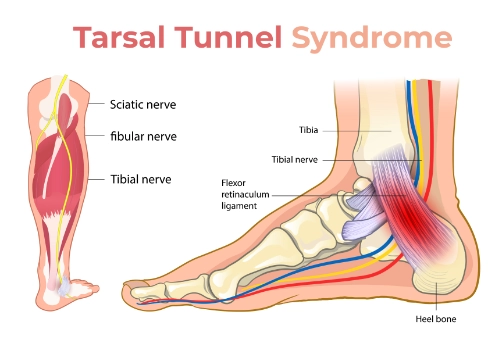
The tarsal tunnel is a narrow, fibrous space located on the inside of the ankle, just below the bony bump known as the medial malleolus. This tunnel is covered by a thick band of connective tissue called the flexor retinaculum, and it acts as a protective passageway for several important structures traveling from the lower leg into the foot: tendons, blood vessels, and most importantly, the posterior tibial nerve.
When something causes the space inside this tunnel to shrink — whether from swelling, structural changes, or biomechanical stress — the posterior tibial nerve gets compressed. This is called posterior tibial nerve entrapment, and it’s the defining feature of tarsal tunnel syndrome. Because the posterior tibial nerve branches into smaller nerves that supply sensation to the heel, arch, and toes, compression here can produce a wide range of confusing symptoms that spread throughout the foot.
What Causes Tarsal Tunnel Syndrome?
Tarsal tunnel syndrome rarely has a single, obvious cause. More often, it develops from a combination of structural, biomechanical, and lifestyle factors that gradually narrow the tunnel or increase pressure on the nerve. Common contributors include:
- Overpronation and flat feet: When the arch collapses excessively during walking or running, it stretches and compresses the tarsal tunnel with every step.
- Ankle injuries: Sprains, fractures, or repeated ankle trauma can cause scar tissue and swelling that narrow the tunnel.
- Space-occupying lesions: Ganglion cysts, varicose veins, or bone spurs near the tunnel can physically crowd the nerve.
- Systemic inflammation: Conditions like rheumatoid arthritis or diabetes can cause swelling that reduces the available space in the tunnel.
- Biomechanical misalignment: Poor foot mechanics, leg length discrepancies, or gait abnormalities can place uneven, repetitive stress on the ankle and its soft tissues.
- Prolonged standing or repetitive activity: Occupations or sports that involve extended time on your feet increase cumulative strain on the tunnel.
Interestingly, many of these mechanical causes trace back up the kinetic chain — meaning misalignments in the foot, ankle, knee, hip, or even the lower spine can alter how weight and pressure move through the tarsal tunnel. This is one of the key reasons chiropractic assessment goes beyond just the ankle itself.
Recognizing the Symptoms
Tarsal tunnel syndrome symptoms typically appear along the inside of the ankle and can radiate into the arch, heel, or toes. Patients often describe:
- Burning, tingling, or electric-shock sensations along the inner ankle and sole of the foot
- Numbness in the toes or bottom of the foot
- A sensation of pins and needles that worsens with standing, walking, or exercise
- Pain that intensifies at night or after prolonged activity
- A positive Tinel’s sign — tingling that shoots into the foot when the area behind the inner ankle bone is tapped
- Muscle weakness in the foot in more advanced cases
Because these symptoms overlap significantly with plantar fasciitis, peripheral neuropathy, and even lumbar nerve root irritation, tarsal tunnel syndrome is frequently misdiagnosed. A thorough neurological and biomechanical evaluation is essential to pinpoint the actual source of the compression.
How Chiropractic Care Treats Tarsal Tunnel Syndrome
Chiropractic treatment for tarsal tunnel syndrome focuses on relieving pressure on the posterior tibial nerve by correcting the underlying biomechanical issues that caused the compression in the first place — not just addressing the symptom locally.
Comprehensive Biomechanical Assessment
Your chiropractor will evaluate your gait, foot arch structure, ankle mobility, and overall lower extremity alignment. Because problems anywhere along the kinetic chain — from the lumbar spine down to the foot — can contribute to abnormal loading on the ankle, this assessment often extends beyond the immediate area of pain.
Extremity Adjustments
Targeted, low-force adjustments to the ankle and foot joints can help restore normal joint motion, reduce compensatory stress on the tarsal tunnel, and improve the position of the bones surrounding the nerve pathway.
Soft Tissue Therapy
Techniques such as myofascial release and instrument-assisted soft tissue mobilization (IASTM) help reduce tension and adhesions in the muscles and tendons that pass through the tarsal tunnel, easing pressure on the posterior tibial nerve.
Nerve Mobilization Techniques
Gentle nerve gliding exercises can help the posterior tibial nerve move more freely within the tunnel, reducing irritation and improving circulation to the nerve tissue itself.
Custom Orthotics and Arch Support
For patients with overpronation or flat feet contributing to the condition, custom orthotics can correct faulty foot mechanics and reduce the repetitive strain that narrows the tarsal tunnel with every step.
Corrective Exercise and Rehabilitation
Strengthening the muscles that support the arch, along with targeted ankle stability exercises, helps prevent the biomechanical breakdown that leads to nerve compression in the first place.
Chiropractic Care vs. Cortisone Injections and Surgery
Conventional treatment for tarsal tunnel syndrome often starts with rest, anti-inflammatory medication, or cortisone injections into the tunnel. While these can offer short-term symptom relief, they don’t correct the biomechanical dysfunction causing the nerve compression — and repeated injections carry risks including tissue weakening and, in some cases, further nerve irritation.
In more severe or long-standing cases, patients may be steered toward tarsal tunnel release surgery, an invasive procedure that involves cutting the flexor retinaculum to relieve pressure on the nerve. Surgery carries the typical risks of infection, scar tissue formation, and extended recovery time, and outcomes can vary significantly depending on how long the nerve was compressed before treatment.
Chiropractic care offers a conservative alternative that targets the biomechanical root cause — whether that’s overpronation, joint restriction, or postural misalignment further up the kinetic chain — rather than simply masking pain or resorting to invasive intervention. For many patients, especially those caught in the early to moderate stages of nerve compression, this conservative approach can resolve symptoms without ever requiring injections or surgery.
What to Expect During Recovery
Recovery timelines for tarsal tunnel syndrome vary depending on how long the nerve has been compressed and the severity of symptoms. Mild cases caught early may respond within a few weeks of consistent chiropractic care, while more chronic or advanced cases may take several months of combined treatment, including adjustments, soft tissue work, orthotics, and home exercises.
Your chiropractor will typically recommend a progressive care plan, starting with more frequent visits to calm inflammation and restore proper mechanics, then tapering to maintenance visits as symptoms improve. Consistency with prescribed stretches and strengthening exercises at home plays a major role in how quickly and completely patients recover.
Take the First Step Toward Relief
Nerve pain in the foot and ankle can be frustrating, especially when it’s been misdiagnosed or treated without lasting results. If you’re experiencing burning, tingling, or numbness along your inner ankle or the bottom of your foot, don’t wait for it to worsen. Call our office today to schedule a comprehensive evaluation. Our team will assess your foot mechanics, ankle alignment, and overall kinetic chain to identify the true source of your symptoms and build a personalized, conservative treatment plan to get you moving comfortably again.
Frequently Asked Questions
What does tarsal tunnel syndrome feel like?
Most people describe a burning, tingling, or electric-shock sensation along the inside of the ankle that can radiate into the arch, heel, or toes. Numbness and a pins-and-needles feeling are also common, especially after standing or walking for extended periods.
Is tarsal tunnel syndrome the same as plantar fasciitis?
No. While both conditions cause foot pain and are often confused, plantar fasciitis involves inflammation of the thick band of tissue on the bottom of the foot, while tarsal tunnel syndrome involves compression of the posterior tibial nerve. A proper neurological exam can distinguish between the two, and it’s possible to have both conditions at the same time.
Can flat feet cause tarsal tunnel syndrome?
Yes. Flat feet and overpronation are among the most common contributing factors, since the collapsed arch alters foot mechanics and places repetitive stress on the tarsal tunnel with every step you take.
Can a chiropractor really help with nerve pain in the foot?
Yes. Chiropractors are trained to assess the entire kinetic chain, from the lumbar spine down through the foot, to identify and correct the biomechanical issues contributing to nerve compression. Combined with soft tissue therapy and nerve mobilization techniques, this approach can relieve pressure on the posterior tibial nerve without medication or surgery.
How long does it take to recover from tarsal tunnel syndrome with chiropractic care?
Recovery timelines vary based on severity and how long the condition has gone untreated. Mild cases may improve within a few weeks of consistent care, while more chronic cases can take several months of combined treatment and home exercises.
What happens if tarsal tunnel syndrome is left untreated?
Without treatment, ongoing nerve compression can lead to chronic pain, worsening numbness, and eventually muscle weakness or atrophy in the foot. Early intervention gives you the best chance of a full recovery without needing more invasive treatment.
Do I need an MRI to diagnose tarsal tunnel syndrome?
Not always. Many cases can be identified through a thorough physical and neurological exam, including tests like Tinel’s sign. Imaging such as MRI or ultrasound may be recommended if a structural cause like a cyst or bone spur is suspected, or if symptoms don’t respond to conservative care.
For More Information
We would be happy to answer any questions you have about this article, general spinal health or your specific situation. To discuss your symptoms and concerns call (208) 656-8883.
DID YOU ENJOY THIS ARTICLE?
If so, get email updates for free! Just leave your email address in the field provided below and we'll handle the rest.
NEED TO SCHEDULE AN APPOINTMENT?
Then call Dr. Todd Orchard at (208) 656-8883 today!
Orchard Chiropractic
160 E. Valley River Drive #3
Rexburg, Idaho 83440
How We Are Different
Dr. Orchard is a unique Rexburg chiropractor who specializes in difficult cases that have not responded to other care. All treatment plans are highly individualized based on your specific history, needs and goals.
Areas We Serve
We are located in Rexburg and serve the communities that reside in zip codes 83440, 83460, 83442, 83448, and 83445. However, we see patients from a large radius around Rexburg which include Brigham Young University, Rigby, Sugar City, and St. Anthony because of the unique, customized treatment options we offer.