 If you or someone you love has been diagnosed with spondylolytic spondylolisthesis, you know how disruptive this condition can be. Chronic low back pain, stiffness, nerve-related symptoms shooting down the legs, and the frustrating feeling that nothing seems to provide lasting relief — it can wear you down quickly. But here’s the good news: chiropractic care has helped countless patients manage this condition effectively, reduce pain, and get back to living the life they love.
In this article, we’ll break down exactly what spondylolytic spondylolisthesis is, how it affects your spine, and why chiropractic care may be one of the most effective conservative treatment options available to you today.
What Is Spondylolytic Spondylolisthesis?
Let’s start by demystifying the terminology. Spondylolisthesis refers to the forward slippage of one vertebra over the vertebra below it. The word spondylolytic (also called isthmic) means that this slippage is caused by a specific defect or fracture in a small section of the vertebra called the pars interarticularis — a bony bridge connecting the upper and lower facet joints of the spine.
When the pars interarticularis develops a stress fracture (called a spondylolysis), the structural integrity of that vertebra is compromised. Over time, that vertebra can begin to slide forward, putting pressure on the spinal canal, nearby nerve roots, and surrounding soft tissues. This most commonly occurs at the L5-S1 level, the junction between the lumbar spine and the sacrum.
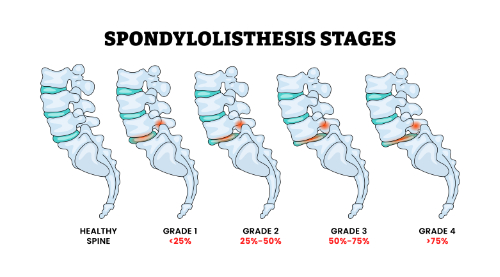
Spondylolytic spondylolisthesis is graded on a scale of I through IV based on how far the vertebra has slipped:
- Grade I: 1–25% slip
- Grade II: 26–50% slip
- Grade III: 51–75% slip
- Grade IV: 76–100% slip
Most patients with chiropractic-appropriate presentations fall within the Grade I or Grade II range. Higher-grade slips typically require a more specialized, multidisciplinary approach.
Who Gets Spondylolytic Spondylolisthesis?
This condition is more common than many people realize. It is estimated that spondylolysis — the fracture that often precedes spondylolisthesis — affects approximately 6% of the general population. It is particularly prevalent among young athletes who participate in sports that place repetitive stress on the lumbar spine, such as gymnastics, football, wrestling, and weightlifting.
However, spondylolytic spondylolisthesis is not limited to athletes. Adults of all ages can be affected, especially if they have a genetic predisposition, a history of repetitive physical labor, or experienced an unresolved spondylolysis during adolescence that has progressed over time.
Common Symptoms of Spondylolytic Spondylolisthesis
Not everyone with this condition experiences the same symptoms — in fact, some people discover their spondylolisthesis incidentally on an X-ray taken for an unrelated reason. But for those who do have symptoms, the most common complaints include:
- Persistent or recurring low back pain, often worse with activity and relieved with rest
- Buttock pain that may radiate into one or both legs
- Sciatica — sharp, burning, or tingling pain that travels down the leg along the sciatic nerve pathway
- Muscle tightness and spasm in the lower back and hamstrings
- Difficulty standing for long periods or walking long distances
- A feeling of instability or weakness in the lower back
- In more advanced cases, changes in bladder or bowel function (which require immediate medical attention)
These symptoms can significantly impact quality of life, making even simple daily tasks feel like a challenge.
How Chiropractic Care Approaches Spondylolytic Spondylolisthesis
One of the most important things to understand about chiropractic care for spondylolisthesis is that it is not a one-size-fits-all approach. A skilled chiropractor will first conduct a thorough evaluation — including a detailed health history, orthopedic and neurological examination, and a review of any imaging studies (X-rays, MRI, CT scans) — before developing a personalized treatment plan.
The goals of chiropractic care for this condition typically include:
- Reducing pain and inflammation
- Improving spinal alignment and biomechanics
- Stabilizing the affected spinal segment
- Reducing nerve irritation and improving neurological function
- Strengthening the muscles that support the lumbar spine
- Improving overall mobility and function
Chiropractic Techniques Commonly Used
Low-Force Spinal Adjustments: Traditional high-velocity spinal manipulation is often modified or avoided directly at the affected vertebral level in spondylolisthesis cases. Instead, chiropractors may use low-force techniques such as instrument-assisted adjustments (Activator), drop-table techniques, or flexion-distraction therapy to gently mobilize surrounding segments without placing undue stress on the unstable vertebra.
Flexion-Distraction Therapy: This is a particularly popular and evidence-supported technique for spondylolisthesis patients. The patient lies on a specially designed table that gently distracts and flexes the spine, reducing disc pressure, improving joint mobility, and taking compression off nerve roots — all without aggressive manipulation.
Soft Tissue Therapy: Muscle tightness — especially in the hamstrings, hip flexors, and paraspinal muscles — is a common secondary problem with spondylolisthesis. Myofascial release, trigger point therapy, and other soft tissue techniques can help reduce muscle guarding, improve circulation, and support spinal stability.
Therapeutic Exercise and Rehabilitation: A well-rounded chiropractic treatment plan goes beyond adjustments. Chiropractors often prescribe targeted exercises designed to strengthen the core muscles — particularly the deep stabilizers like the multifidus and transverse abdominis — that act as a natural brace for the lumbar spine. Strong core muscles are essential for managing spondylolisthesis long-term.
Postural and Lifestyle Counseling: Your chiropractor will also work with you on ergonomic adjustments, activity modifications, and postural habits that reduce stress on the affected spinal segment throughout your daily life.
Is Chiropractic Care Safe for Spondylolisthesis?
Safety is always the top priority, and this is a very reasonable question to ask. For patients with Grade I or Grade II spondylolisthesis who do not have progressive neurological deficits, chiropractic care is widely considered safe and appropriate when performed by a licensed, experienced chiropractor who has reviewed the patient’s imaging studies and tailored the treatment accordingly.
Patients with Grade III or IV slips, significant neurological compromise, or other complicating factors may require co-management with a spine specialist or orthopedic surgeon before pursuing chiropractic care. Your chiropractor will always refer out when appropriate — your safety comes first.
It’s also worth noting that multiple clinical studies and guidelines support conservative care — including chiropractic — as the preferred first-line approach for low back pain conditions like spondylolisthesis, particularly before considering surgery.
What to Expect from Your First Visit
If you’re considering chiropractic care for spondylolytic spondylolisthesis, here’s what a typical first visit looks like:
- Comprehensive consultation: You’ll discuss your symptoms, medical history, previous treatments, and goals for care.
- Physical examination: Orthopedic and neurological tests help identify the extent of nerve involvement, muscle weakness, and functional limitations.
- Review of imaging: If you have existing X-rays or MRI studies, your chiropractor will review them. Additional imaging may be recommended if not yet obtained.
- Personalized treatment plan: Based on the findings, your chiropractor will outline a treatment plan with realistic goals, expected timelines, and milestones for progress.
Many patients begin to notice meaningful improvement within just a few weeks of starting consistent chiropractic care.
The Bottom Line: Don’t Let Spondylolisthesis Control Your Life
Spondylolytic spondylolisthesis is a real and often painful condition — but it does not have to define your daily experience. With the right conservative care approach, many patients are able to manage their symptoms effectively, avoid surgery, and return to the activities they love. Chiropractic care, when properly applied, can be a cornerstone of that recovery journey.
If you’ve been diagnosed with spondylolisthesis, or if you suspect you may have this condition based on your symptoms, don’t wait for things to get worse. The sooner you seek care, the more options you have.
Frequently Asked Questions (FAQ)
Can chiropractic care cure spondylolytic spondylolisthesis?
Chiropractic care does not “cure” spondylolisthesis in the sense of reversing the structural defect in the pars interarticularis. However, it can significantly reduce pain, improve function, and help stabilize the spine so that the condition does not worsen. Many patients experience excellent long-term outcomes with consistent chiropractic management.
Will I need surgery for spondylolisthesis?
The vast majority of spondylolisthesis cases — particularly Grade I and II — respond well to conservative treatment and do not require surgery. Surgery is typically considered only when conservative care has failed, or when there is significant neurological involvement that is worsening over time. Your healthcare team will guide you through this decision if and when it becomes relevant.
How long does it take to see results with chiropractic care?
Many patients begin to notice pain reduction and improved mobility within the first 2–4 weeks of treatment. Full stabilization and functional improvement may take several months, especially for chronic or more complex cases. Your chiropractor will set clear, measurable goals so you can track your progress.
Can I exercise if I have spondylolisthesis?
Yes — in fact, targeted exercise is one of the most important components of managing spondylolisthesis. However, not all exercises are appropriate. Your chiropractor can design a safe, condition-specific exercise program that strengthens stabilizing muscles without aggravating the unstable segment. High-impact or hyperextension-based activities are typically avoided, especially early in treatment.
Is spondylolisthesis the same as a herniated disc?
No, they are different conditions, though they can coexist. A herniated disc involves the displacement of the soft inner material of a spinal disc pressing on nerves. Spondylolisthesis involves the forward slippage of an entire vertebral body. Both can cause similar symptoms, which is why proper diagnosis through imaging is so important.
What makes spondylolytic spondylolisthesis different from other types?
There are several types of spondylolisthesis, classified by their cause. The spondylolytic (or isthmic) type is specifically caused by a stress fracture of the pars interarticularis. Other types include degenerative (caused by arthritis and disc degeneration), congenital (present from birth), and traumatic (caused by acute injury). The treatment approach may differ depending on the type and grade.
Ready to Take the First Step? Call Our Office Today.
You don’t have to keep living with the pain and limitations of spondylolytic spondylolisthesis. Our experienced chiropractic team is here to evaluate your unique situation, answer your questions, and build a personalized care plan designed to get you feeling better — and staying better.
Call our office today to schedule your comprehensive consultation. Whether you’re newly diagnosed or have been struggling for years, it’s never too late to explore what chiropractic care can do for your spine and your quality of life. We’re here to help — one step at a time.
For More Information
We would be happy to answer any questions you have about this article, general spinal health or your specific situation. To discuss your symptoms and concerns call (208) 656-8883.
DID YOU ENJOY THIS ARTICLE?
If so, get email updates for free! Just leave your email address in the field provided below and we'll handle the rest.
NEED TO SCHEDULE AN APPOINTMENT?
Then call Dr. Todd Orchard at (208) 656-8883 today!
Orchard Chiropractic
160 E. Valley River Drive #3
Rexburg, Idaho 83440
How We Are Different
Dr. Orchard is a unique Rexburg chiropractor who specializes in difficult cases that have not responded to other care. All treatment plans are highly individualized based on your specific history, needs and goals.
Areas We Serve
We are located in Rexburg and serve the communities that reside in zip codes 83440, 83460, 83442, 83448, and 83445. However, we see patients from a large radius around Rexburg which include Brigham Young University, Rigby, Sugar City, and St. Anthony because of the unique, customized treatment options we offer.