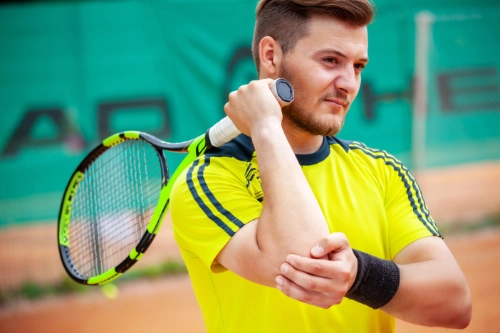
 That sharp, burning pain on the outside of your elbow every time you grip a coffee cup, shake a hand, or turn a doorknob isn’t just annoying — it can quietly take over your day. Despite the name, you don’t need to play tennis to develop this condition; it shows up in office workers, painters, plumbers, parents lifting toddlers, and anyone who repeats the same wrist and forearm motion over and over. Chiropractic care offers a conservative, drug-free way to address the root cause of tennis elbow rather than simply masking the pain, and it’s often a smart first step before considering injections or surgery.
In this article, we’ll explain what tennis elbow actually is, why it develops, and how chiropractic treatment can help you get back to pain-free gripping, lifting, and typing.
What Is Tennis Elbow?
Tennis elbow, medically known as lateral epicondylitis, is an overuse injury affecting the tendons that attach your forearm extensor muscles to the bony bump on the outside of your elbow (the lateral epicondyle). These tendons are responsible for extending your wrist and fingers backward — the motion you use to lift a bag, swing a racket, or type on a keyboard.
When those tendons are repeatedly stressed without adequate recovery, microscopic tears develop at the tendon attachment. Over time, this leads to degeneration of the tendon tissue rather than classic inflammation, which is why chronic cases are sometimes more accurately called “lateral epicondylosis” or “tendinosis” instead of “tendinitis.”
What Causes Tennis Elbow?
Despite its sporting name, the vast majority of tennis elbow cases have nothing to do with racket sports. Common contributing factors include:
Repetitive Gripping and Wrist Motion
Jobs and hobbies that involve repeated gripping, typing, hammering, or twisting motions — such as carpentry, plumbing, painting, cooking, or extended computer work — place ongoing strain on the extensor tendons.
Poor Technique or Ergonomics
An awkward grip on a tool, a mouse positioned too far from the body, or improper lifting mechanics can overload the forearm muscles even during low-intensity activities.
Muscle Imbalances and Weakness
Weak or deconditioned forearm extensors are more vulnerable to strain. Imbalances between the flexor and extensor muscle groups can also shift excess load onto the already-stressed tendons.
Cervical and Upper Extremity Dysfunction
The nerves that supply your forearm muscles originate in your neck. Restrictions or misalignments in the cervical spine, as well as tension in the shoulder and upper back, can alter nerve signaling and muscle firing patterns down the arm, making the elbow tendons work harder than they should.
Age and Circulation
Tendons naturally lose elasticity and blood supply with age, which is part of why tennis elbow most commonly appears between ages 30 and 50, even in people who haven’t changed their activity level.
Common Symptoms of Tennis Elbow
Most people with tennis elbow report:
Pain or burning on the outer elbow that may radiate into the forearm.
Weak grip strength, making it hard to shake hands, lift a coffee mug, or open a jar.
Pain with specific movements such as gripping, twisting a doorknob, or lifting with the palm facing down.
Tenderness directly over the bony bump on the outside of the elbow.
Stiffness in the elbow, especially first thing in the morning.
Symptoms often start mild and worsen gradually, which leads many people to ignore the early warning signs until the pain becomes constant.
How Chiropractic Care Treats Tennis Elbow
Chiropractic treatment for tennis elbow goes beyond the sore spot on your elbow. A thorough evaluation looks at your wrist, elbow, shoulder, and cervical spine to identify every factor contributing to your pain, then builds a treatment plan around correcting them.
Extremity Adjustments
Restricted joint motion in the elbow, wrist, or even the small bones of the forearm can alter how force travels through the arm. Gentle, specific adjustments to these joints help restore proper mechanics and take stress off the irritated tendon.
Soft Tissue Therapy and Instrument-Assisted Techniques
Techniques like myofascial release, Active Release Technique (ART), and instrument-assisted soft tissue mobilization (IASTM, sometimes called Graston Technique) break up adhesions and scar tissue in the forearm extensors, improving blood flow and encouraging proper tendon healing.
Cervical Spine Evaluation
Because nerve signals to the forearm originate in the neck, many chiropractors assess and treat cervical spine restrictions as part of a comprehensive tennis elbow protocol. Addressing nerve irritation at its source can significantly speed recovery.
Eccentric Strengthening Exercises
Research consistently supports eccentric loading exercises — controlled lengthening contractions of the wrist extensors — as one of the most effective ways to remodel damaged tendon tissue. Your chiropractor can guide you through a progressive home exercise program tailored to your stage of healing.
Bracing and Activity Modification
A counterforce brace or forearm strap can reduce tension at the tendon attachment during the healing phase, while activity modification guidance helps you avoid re-aggravating movements without putting your life on hold.
Chiropractic Care vs. Cortisone Injections and Surgery
Cortisone injections are commonly offered for tennis elbow because they provide short-term pain relief. However, research has raised concerns that repeated cortisone injections may weaken tendon tissue over time and are associated with higher recurrence rates compared to conservative care. Surgery, meanwhile, is typically reserved for the small percentage of cases that fail to improve after six months or more of consistent conservative treatment.
Chiropractic care, by contrast, targets the underlying biomechanical and neurological contributors to tennis elbow rather than simply numbing the area. By combining joint mobilization, soft tissue work, and progressive strengthening, many patients experience meaningful, lasting improvement without the risks associated with injections or the recovery time required after surgery.
What to Expect During Treatment
Your first visit will typically include a detailed history, orthopedic testing to confirm the diagnosis and rule out other causes of elbow pain, and an assessment of your wrist, elbow, shoulder, and cervical spine. From there, your chiropractor will build a personalized plan that may include in-office treatments several times per week initially, tapering as your symptoms improve, along with a home exercise program to support long-term healing.
Most patients begin noticing improvement within a few weeks, though full tendon remodeling can take two to three months depending on how long the condition has been present and how consistently home exercises are performed.
Ready to Get Relief From Tennis Elbow?
You don’t have to keep working around elbow pain or wait until it becomes unbearable. Our team is here to identify exactly what’s driving your symptoms and build a treatment plan that gets you back to your daily activities without relying on injections or surgery. Call our office today to schedule your evaluation and take the first step toward a pain-free grip.
Frequently Asked Questions
How long does tennis elbow take to heal with chiropractic care?
Most patients notice measurable improvement within two to four weeks of starting treatment, though complete healing often takes two to three months since tendon tissue remodels slowly. Chronic cases that have been present for six months or longer may take a bit longer to fully resolve, but consistent care and home exercises significantly improve the timeline.
Do I need to stop working or exercising if I have tennis elbow?
You typically don’t need to stop all activity, but you will need to modify movements that aggravate the tendon, such as heavy gripping or repetitive wrist extension. Your chiropractor can help you identify which activities to temporarily adjust and provide strategies to keep you functional while you heal.
Is tennis elbow the same as golfer’s elbow?
No. Tennis elbow (lateral epicondylitis) affects the tendons on the outside of the elbow, while golfer’s elbow (medial epicondylitis) affects the tendons on the inside. Both conditions involve overuse of the forearm tendons and respond well to similar chiropractic treatment approaches, but they affect different muscle groups.
Can poor posture or neck problems really cause elbow pain?
Yes. The nerves controlling your forearm muscles originate in the cervical spine, so restrictions or irritation in the neck can affect muscle function and nerve signaling all the way down to your elbow and wrist. This is why a thorough chiropractic evaluation includes the neck and shoulder, not just the elbow itself.
What happens if tennis elbow is left untreated?
Untreated tennis elbow can progress from an intermittent ache to constant pain that interferes with basic tasks like gripping, lifting, and typing. Over time, the tendon degeneration can worsen, making treatment more difficult and prolonged. Early intervention generally leads to a faster, more complete recovery.
Will I need imaging like an X-ray or MRI for tennis elbow?
Most cases of tennis elbow can be diagnosed through a physical exam and specific orthopedic tests without imaging. Your chiropractor may recommend an X-ray or MRI if there’s concern about a more serious underlying issue, such as a fracture or significant tendon tear, or if symptoms aren’t improving as expected with conservative care.
Can tennis elbow come back after it heals?
It can, particularly if the underlying causes — such as poor ergonomics, muscle weakness, or repetitive strain — aren’t addressed. That’s why treatment focuses on more than just pain relief; correcting movement patterns, building forearm strength, and making ergonomic adjustments all help reduce the risk of recurrence.
For More Information
We would be happy to answer any questions you have about this article, general spinal health or your specific situation. To discuss your symptoms and concerns call (208) 656-8883.
DID YOU ENJOY THIS ARTICLE?
If so, get email updates for free! Just leave your email address in the field provided below and we'll handle the rest.
NEED TO SCHEDULE AN APPOINTMENT?
Then call Dr. Todd Orchard at (208) 656-8883 today!
Orchard Chiropractic
160 E. Valley River Drive #3
Rexburg, Idaho 83440
How We Are Different
Dr. Orchard is a unique Rexburg chiropractor who specializes in difficult cases that have not responded to other care. All treatment plans are highly individualized based on your specific history, needs and goals.
Areas We Serve
We are located in Rexburg and serve the communities that reside in zip codes 83440, 83460, 83442, 83448, and 83445. However, we see patients from a large radius around Rexburg which include Brigham Young University, Rigby, Sugar City, and St. Anthony because of the unique, customized treatment options we offer.