 If you’ve been told you have spinal stenosis, you may have walked away from that conversation with a heavy feeling — like the clock is ticking toward an inevitable surgery. That’s understandable. Spinal stenosis is a real structural condition, and it can produce some genuinely debilitating symptoms. But here’s what many patients are never told: surgery is not the only path forward, and for a significant number of people, it isn’t even the best one.
Conservative, non-surgical care — including chiropractic care — can meaningfully reduce spinal stenosis symptoms, improve function, and help patients reclaim their quality of life without the risks and lengthy recovery that come with surgical intervention. In this article, we’ll explain exactly what spinal stenosis is, what causes it, how it produces pain, and how chiropractic treatment addresses it from the inside out.
What Is Spinal Stenosis?
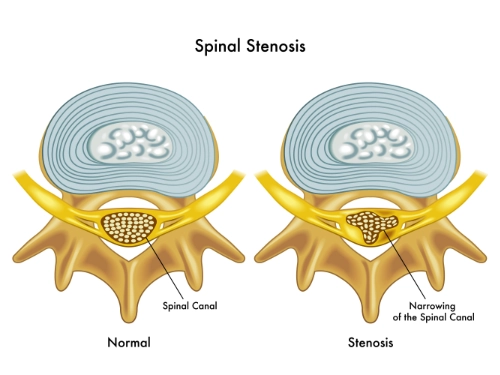
Spinal stenosis is the narrowing of the spaces within the spine through which the spinal cord and nerve roots travel. The word “stenosis” comes from the Greek word for narrowing, and that’s precisely what happens: the canal or the small openings where nerves exit the spine become constricted, placing pressure on the neural structures passing through them.
This narrowing can occur in one of two main locations. Central stenosis involves narrowing of the spinal canal itself — the central tube that houses the spinal cord and cauda equina. Foraminal stenosis involves narrowing of the intervertebral foramina, the small openings on either side of the vertebrae through which individual nerve roots exit the spine. Both types can be present at the same time, and both can produce significant pain and neurological symptoms.
Spinal stenosis most commonly develops in the lumbar spine (lower back) and the cervical spine (neck), with lumbar stenosis being the more prevalent of the two. The thoracic spine is less frequently affected due to its relative rigidity and the structural support provided by the rib cage.
What Causes Spinal Stenosis?
In the vast majority of cases, spinal stenosis is the result of age-related degenerative changes in the spine. It is rarely present at birth, though congenital narrowing of the spinal canal does exist as a less common form. The degenerative process typically involves several interconnected changes:
Disc Degeneration and Disc Bulges
The intervertebral discs that cushion each vertebra gradually lose water content and height as we age. As discs thin and bulge outward, they can protrude into the spinal canal or the foraminal openings, contributing directly to stenotic narrowing. The loss of disc height also causes the vertebrae to sit closer together, further reducing the available space for neural structures.
Bone Spur Formation (Osteophytes)
In response to the increased mechanical stress created by disc degeneration and altered spinal mechanics, the body attempts to stabilize the affected segments by forming extra bone tissue. These bony growths — called osteophytes or bone spurs — often develop along the edges of vertebral bodies and the facet joints. While the body’s intention is stabilization, bone spurs frequently grow inward toward the spinal canal or foramina, where they progressively narrow the available space.
Facet Joint Hypertrophy
The facet joints — the paired joints at the back of each vertebra that guide spinal movement — undergo their own degenerative changes over time. As the articular cartilage wears down and the joints become arthritic, the joint capsules thicken and the bony joint surfaces enlarge. This facet hypertrophy is a significant contributor to central and foraminal stenosis, particularly in the lumbar spine.
Ligamentum Flavum Thickening
The ligamentum flavum is a elastic ligament that runs along the inside of the spinal canal, connecting adjacent vertebral arches. With age and chronic spinal stress, this ligament loses elasticity and thickens — sometimes dramatically — buckling inward into the spinal canal during extension movements and contributing substantially to central stenosis. Ligamentum flavum thickening is one of the most frequently overlooked contributors to lumbar stenosis.
Spondylolisthesis
When one vertebra slips forward over the vertebra below it — a condition called spondylolisthesis — it can significantly narrow the spinal canal at that level. Degenerative spondylolisthesis, which develops gradually as a result of facet joint arthritis and ligamentous laxity, is a common accompaniment to lumbar spinal stenosis in older adults.
Recognizing the Symptoms of Spinal Stenosis
Spinal stenosis has a recognizable symptom profile, though the specifics vary depending on which region of the spine is affected and which structures are being compressed.
Neurogenic Claudication
Neurogenic claudication is the hallmark symptom of lumbar spinal stenosis. It refers to pain, cramping, heaviness, or weakness in one or both legs that develops during walking or prolonged standing and is relieved by sitting down or leaning forward. This postural pattern is highly characteristic: leaning forward flexes the lumbar spine, momentarily increasing the available space in the spinal canal and alleviating the pressure on compressed nerves. Many stenosis patients instinctively lean on shopping carts, walkers, or countertops — a posture known as the “shopping cart sign” — because flexion provides relief.
Radiating Leg Pain and Sciatica-Like Symptoms
Compression of the lumbar nerve roots produces pain, numbness, tingling, or weakness that radiates from the lower back into the buttocks, thighs, calves, and feet — a pattern that can closely resemble sciatica caused by a disc herniation. Distinguishing between the two often requires a detailed history and physical examination, since the treatment approach differs in meaningful ways.
Neck Pain, Arm Pain, and Balance Problems
Cervical spinal stenosis produces a different symptom picture. Compressed cervical nerve roots cause pain, numbness, and weakness radiating into the shoulders, arms, and hands. When the spinal cord itself is compressed in the cervical region — a condition called cervical myelopathy — more serious symptoms can develop, including balance and coordination problems, difficulty with fine motor tasks, and in severe cases, changes in bladder or bowel function. Cervical myelopathy requires careful evaluation and medical co-management.
Low Back Pain and Stiffness
Aching, stiffness, and reduced range of motion in the lower back are common accompaniments to lumbar stenosis, reflecting the underlying facet arthropathy and degenerative disc disease driving the condition. Morning stiffness that eases with movement, and pain that worsens with extended standing or walking, are characteristic patterns.
How Chiropractic Care Treats Spinal Stenosis
Chiropractic care does not reverse the structural changes — the bone spurs, disc degeneration, and ligament thickening — that create stenosis. What it does do is optimize the function of the structures around those changes, reduce inflammation and nerve irritation, restore as much spinal mobility as possible, and address the compensatory muscle tension and postural dysfunction that amplify pain and disability. For many patients, this is enough to produce significant, lasting relief.
An important first step is thorough evaluation — including a review of any imaging — to confirm the location and severity of stenosis, rule out contraindications to spinal manipulation, and tailor treatment to what’s actually safe and appropriate for the individual presentation.
Flexion-Distraction Therapy
Flexion-distraction is one of the most valuable chiropractic tools for managing lumbar spinal stenosis. Performed on a specially designed table that allows the chiropractor to gently flex, distract, and decompress the lumbar spine, this technique increases the anterior height of the spinal canal, reduces intradiscal pressure, and stretches the posterior ligaments — including the thickened ligamentum flavum — to create more space for compressed neural structures. Flexion-distraction is gentle enough for older and more fragile patients and does not involve the high-velocity thrusting associated with traditional spinal manipulation.
Low-Force and Instrument-Assisted Adjustments
For patients with significant degeneration, osteoporosis, or other factors that make traditional spinal manipulation less appropriate, low-force chiropractic techniques and instrument-assisted adjusting devices deliver precise, controlled force to restricted spinal joints without the rotational stress of manual adjustments. These techniques restore segmental mobility and reduce joint fixation without placing excess load on already compromised spinal structures.
Lumbar Decompression
Spinal decompression therapy — traction-based treatment that gently elongates the spine and reduces disc and nerve compression — can provide meaningful relief for stenosis patients, particularly those with a foraminal narrowing component driven by disc degeneration and bulging. Repeated decompression sessions help reduce nerve root pressure, promote circulation to the affected discs, and gradually improve functional capacity.
Soft Tissue Therapy and Muscle Work
Chronic nerve compression from stenosis leads predictably to compensatory muscle guarding, trigger points, and altered movement patterns that compound the patient’s pain and limitation. Myofascial release, trigger point therapy, and manual soft tissue work targeting the paraspinal muscles, hip flexors, and gluteal musculature reduce the secondary muscular pain load and help the body move more freely around the structural restrictions that can’t be fully reversed.
Postural and Stabilization Rehabilitation
Strengthening the core musculature — particularly the multifidus, transverse abdominis, and gluteal muscles — provides the dynamic support the stenotic spine needs to remain as functional as possible. A well-supported spine places less compressive load on narrowed segments, reducing symptom provocation and slowing degenerative progression. Your chiropractor will guide you through a targeted exercise progression appropriate for your fitness level and specific stenosis location.
Ergonomic and Activity Modification Guidance
Understanding how to position your body and manage your activities to stay within your functional tolerance is a practical and undervalued aspect of stenosis management. Your chiropractor can provide guidance on walking tolerance, posture during daily activities, sleeping positions that minimize symptoms, and how to structure movement throughout the day to keep pain levels manageable while protecting your spine.
When Chiropractic Care Makes Sense for Spinal Stenosis
Chiropractic care is most appropriate for mild to moderate spinal stenosis where symptoms are primarily pain and functional limitation — without the neurological red flags that indicate urgent surgical evaluation. Patients who are told they have stenosis but don’t yet have weakness, loss of bowel or bladder control, or rapidly progressing neurological changes are typically excellent candidates for conservative chiropractic management.
Even in more advanced presentations, chiropractic care often plays a valuable role alongside other forms of conservative management — physical therapy, pain management, and lifestyle modification — as part of a comprehensive, non-surgical approach. And for patients who ultimately do require surgical intervention, pre-surgical chiropractic care can optimize muscle function and post-surgical chiropractic rehabilitation can accelerate recovery.
You Have More Options Than You Think
A spinal stenosis diagnosis doesn’t have to mean resigning yourself to a life of limited activity or putting yourself on a waiting list for surgery. Many patients manage their stenosis effectively for years with consistent conservative care — and many avoid surgery altogether. The key is getting a thorough evaluation and a treatment plan that’s tailored to your specific condition, your goals, and your overall health picture.
Our office has extensive experience evaluating and managing spinal stenosis conservatively, and we’ll give you an honest assessment of what chiropractic care can realistically accomplish for your situation. Call us today to schedule your consultation. You deserve to understand all of your options — not just the surgical ones.
Frequently Asked Questions About Spinal Stenosis and Chiropractic Care
Can a chiropractor help with spinal stenosis?
Yes. While chiropractic care cannot reverse the structural narrowing that defines spinal stenosis, it can significantly reduce pain, improve spinal mobility, and restore function for many patients. Techniques such as flexion-distraction therapy, low-force adjusting, spinal decompression, soft tissue therapy, and targeted rehabilitation exercises address the pain-generating components of stenosis and help patients manage the condition effectively without surgery. Chiropractic care is most appropriate for mild to moderate stenosis without significant neurological compromise.
What does spinal stenosis feel like?
Lumbar spinal stenosis most commonly produces leg pain, cramping, heaviness, or weakness that develops with walking or prolonged standing and is relieved by sitting or leaning forward — a pattern called neurogenic claudication. Low back pain and stiffness are also typical. Cervical stenosis produces neck pain along with pain, numbness, or weakness radiating into the shoulders, arms, and hands. In both cases, symptoms tend to be positional — certain postures provoke them and others relieve them.
Is spinal stenosis the same as a herniated disc?
No, though the two conditions can coexist and produce overlapping symptoms. A herniated disc occurs when the soft inner material of a disc pushes through its outer wall and presses on nearby nerves. Spinal stenosis is the broader narrowing of the spinal canal or nerve root openings due to multiple degenerative changes — disc degeneration, bone spurs, facet joint thickening, and ligament changes — that often develop together over time. A herniated disc can contribute to stenosis, but stenosis typically involves more widespread structural changes than a single disc herniation.
Should I avoid exercise if I have spinal stenosis?
No — staying active is generally beneficial for spinal stenosis, and prolonged inactivity tends to worsen outcomes by weakening the supporting musculature and reducing circulation. The key is choosing activities and postures that don’t provoke your symptoms. Forward-flexed activities like cycling, swimming, and walking with a slight forward lean are typically better tolerated than exercises that load the spine in extension. Your chiropractor can help you develop an activity plan that keeps you moving safely within your functional tolerance.
How long does chiropractic treatment for spinal stenosis take?
Spinal stenosis is a chronic, degenerative condition, so treatment goals are typically focused on managing symptoms, maintaining function, and slowing progression rather than achieving a complete cure. Most patients begin noticing meaningful symptom improvement within four to eight weeks of consistent care. Long-term management — including periodic maintenance visits and a home exercise routine — is typically part of a sustainable stenosis management plan.
Is spinal stenosis surgery necessary?
Surgery for spinal stenosis is generally considered when conservative treatment has failed to produce adequate relief after a meaningful trial, or when significant neurological symptoms are present — such as progressive leg weakness, loss of bowel or bladder control, or evidence of spinal cord compression in the cervical spine. For the majority of patients with mild to moderate stenosis, conservative care — including chiropractic treatment — can produce substantial and lasting improvement without surgical intervention. It’s always worth exhausting conservative options first.
What is the best sleeping position for spinal stenosis?
Most people with lumbar spinal stenosis find that sleeping in a flexed position reduces symptoms, since flexion opens the spinal canal and reduces nerve compression. Sleeping on your side with your knees drawn up (fetal position) or on your back with a pillow under your knees to maintain a slight lumbar flexion are generally the most comfortable positions. Sleeping flat on your stomach is typically the most aggravating position, as it places the lumbar spine in extension and compresses the posterior elements of the spine.
For More Information
We would be happy to answer any questions you have about this article, general spinal health or your specific situation. To discuss your symptoms and concerns call (208) 656-8883.
DID YOU ENJOY THIS ARTICLE?
If so, get email updates for free! Just leave your email address in the field provided below and we'll handle the rest.
NEED TO SCHEDULE AN APPOINTMENT?
Then call Dr. Todd Orchard at (208) 656-8883 today!
Orchard Chiropractic
160 E. Valley River Drive #3
Rexburg, Idaho 83440
How We Are Different
Dr. Orchard is a unique Rexburg chiropractor who specializes in difficult cases that have not responded to other care. All treatment plans are highly individualized based on your specific history, needs and goals.
Areas We Serve
We are located in Rexburg and serve the communities that reside in zip codes 83440, 83460, 83442, 83448, and 83445. However, we see patients from a large radius around Rexburg which include Brigham Young University, Rigby, Sugar City, and St. Anthony because of the unique, customized treatment options we offer.